
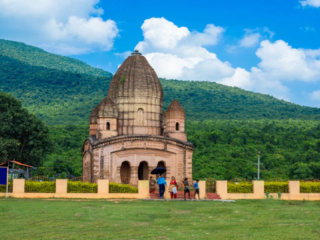
Garh Panchkot
Garh Panchkot is a historical fort complex and scenic hill area near Asansol in Purulia district, West Bengal, India. It is notable for its ruined fortifications, temples, and forested landscape at the foothills of the Panchet Hill range, reflecting the heritage of the Panchkot Raj. Garh Panchkot served as the capital of the Panchkot Raj, ruled by the Singh Deo dynasty, which flourished during the late medieval period. The fort complex included palaces, temples, and defensive walls. It was largely destroyed in the 18th century, reportedly during the Maratha (Bargi) invasions, leaving behind striking ruins that stand as testimony to its former prominence.
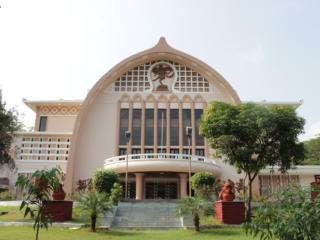
Rabindra Bhavan
Rabindra Bhavan in Asansol, West Bengal, is a cultural and civic auditorium that serves as a key venue for artistic, educational, and social events in the Asansol region. It is named after Nobel laureate Rabindranath Tagore, reflecting his influence on Bengali culture and literature. Rabindra Bhavan is among Asansol’s oldest and most recognizable cultural landmarks. Operated under the Asansol Municipal Corporation, it hosts performances, civic events, and educational programs. The building serves as an accessible venue for both professional and community arts, reinforcing Asansol’s identity as an industrial city with a rich cultural life.
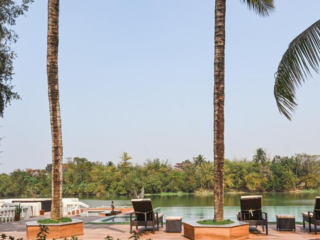
Topsi River Side
Topsi River Side is a local riverside attraction near Asansol in the Paschim Bardhaman district of West Bengal, India. Situated along the Barakar River, it serves as a peaceful spot for leisure, small gatherings, and picnics for residents of Topsi and nearby areas. The site lies on the banks of the Barakar River, a tributary of the Damodar, which flows through the industrial belt of Asansol. The area combines natural scenery with the backdrop of Asansol’s semi-urban landscape, offering greenery, open river views, and seasonal sandbanks. The river’s flow and vegetation change notably between monsoon and winter seasons.

Panchet Dam
Panchet Dam is a major earthen-cum-concrete dam on the Damodar River near Asansol, India. Completed in 1959, it forms part of the Damodar Valley Corporation (DVC) network, a multipurpose river valley project designed for flood control, irrigation, and power generation in eastern India. Built as the fourth and final dam under the DVC system, Panchet Dam combines an earthen embankment with a central concrete spillway. The design reflects mid-20th-century Indian dam engineering influenced by U.S. Tennessee Valley Authority models. The reservoir created by the dam, known as Panchet Hill Reservoir, extends across the border of Jharkhand and West Bengal, providing vital regional water storage.

Maithon Dam
Maithon Dam is a major multipurpose dam built across the Barakar River near the town of Maithon, on the Jharkhand–West Bengal border close to Asansol. Commissioned in the 1950s, it is operated by the Damodar Valley Corporation (DVC) and forms part of India’s first multipurpose river valley project. It serves as a key site for flood control, irrigation, and hydroelectric power generation. Constructed as part of the post-independence Damodar Valley Project, Maithon Dam was designed to manage the seasonal flooding of the Damodar River system, often called the “Sorrow of Bengal.” Completed in 1957, it represented one of India’s early integrated river basin management efforts, modeled partly after the Tennessee Valley Authority in the United States.
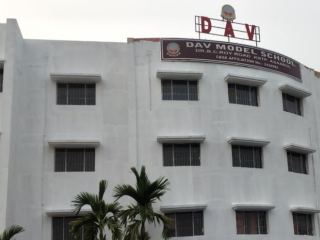
DAV Public School Asansol
DAV Public School Asansol is a co-educational English-medium institution located in Asansol, West Bengal. It is part of the Dayanand Anglo-Vedic (DAV) College Managing Committee, one of India’s largest educational organizations founded to promote the ideals of the Arya Samaj movement. The school is affiliated with the Central Board of Secondary Education (CBSE) and is recognized for combining academic excellence with moral and cultural education. The academic structure includes classes from pre-primary to senior secondary level. The curriculum follows CBSE guidelines, covering science, commerce, and humanities streams at the senior level. Continuous assessment, practical learning, and technology-integrated instruction form key parts of the educational process.
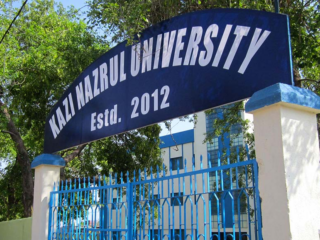
Kazi Nazrul University
Kazi Nazrul University (KNU) is a public university located in Asansol, West Bengal, India. Established in 2012, it is named after poet and national figure Kazi Nazrul Islam. The university serves as a major center for higher education in the coal belt region of West Bengal, emphasizing both academic research and cultural heritage. Kazi Nazrul University was founded by the Government of West Bengal to expand access to higher education in the western part of the state. It was formally inaugurated by then Chief Minister Mamata Banerjee. The university’s mission includes promoting interdisciplinary research and celebrating the literary and humanistic ideals of Kazi Nazrul Islam.
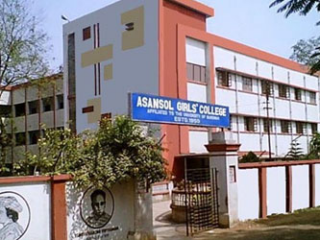
Asansol Girls College
Asansol Girls’ College is a women’s higher-education institution in Asansol, West Bengal, India. Established in 1950, it is affiliated with Kazi Nazrul University and holds a Grade “A” accreditation from the National Assessment and Accreditation Council. The college is recognized for promoting women’s empowerment through quality academic programs and co-curricular engagement. The institution was founded through the efforts of Dr. Lalit Mohan Sen and Smt. Kamala Sen, beginning at Manimala Girls’ High School before moving to its present campus in 1962. Early leadership by Dr. Anjali Roy strengthened its academic foundation, transforming it into one of the region’s most respected women’s colleges.
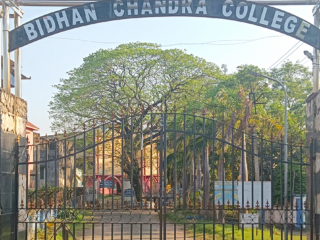
Bidhan Chandra College
Bidhan Chandra College is a government-sponsored coeducational institution of higher learning located in Asansol, West Bengal, India. Established in 1961, it serves as a key center for undergraduate education in the Paschim Bardhaman district and is affiliated with Kazi Nazrul University (formerly with University of Burdwan). The college is named in honor of Dr. Bidhan Chandra Roy, a pioneering statesman and architect of modern Bengal. Located in an urban industrial area, the campus features facilities for academic, cultural, and extracurricular development. It houses well-equipped laboratories, a digital library, computer labs, and seminar halls. Student engagement is fostered through active NSS and NCC units, along with cultural festivals and academic seminars.
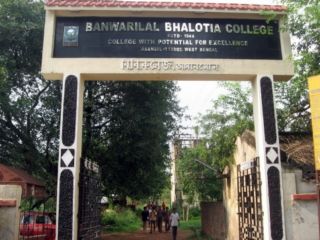
Banwarilal Bhalotia College
Banwarilal Bhalotia College (B.B. College) is a prominent co-educational institution in Asansol, West Bengal, India. Established in 1944, it offers undergraduate and postgraduate programs in arts, science, and commerce. The college is NAAC-accredited with an “A” grade and affiliated with Kazi Nazrul University, serving as one of the region’s leading centers for higher learning. Student development is encouraged through cultural fests, inter-college sports, and community service. The placement cell maintains industry collaborations and internship programs. Numerous merit- and need-based scholarships are available, with more than 60 percent of students receiving financial assistance annually.