
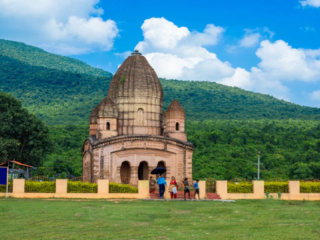
Garh Panchkot
Garh Panchkot is a historical fort complex and scenic hill area near Asansol in Purulia district, West Bengal, India. It is notable for its ruined fortifications, temples, and forested landscape at the foothills of the Panchet Hill range, reflecting the heritage of the Panchkot Raj. Garh Panchkot served as the capital of the Panchkot Raj, ruled by the Singh Deo dynasty, which flourished during the late medieval period. The fort complex included palaces, temples, and defensive walls. It was largely destroyed in the 18th century, reportedly during the Maratha (Bargi) invasions, leaving behind striking ruins that stand as testimony to its former prominence.
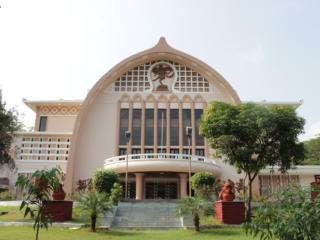
Rabindra Bhavan
Rabindra Bhavan in Asansol, West Bengal, is a cultural and civic auditorium that serves as a key venue for artistic, educational, and social events in the Asansol region. It is named after Nobel laureate Rabindranath Tagore, reflecting his influence on Bengali culture and literature. Rabindra Bhavan is among Asansol’s oldest and most recognizable cultural landmarks. Operated under the Asansol Municipal Corporation, it hosts performances, civic events, and educational programs. The building serves as an accessible venue for both professional and community arts, reinforcing Asansol’s identity as an industrial city with a rich cultural life.
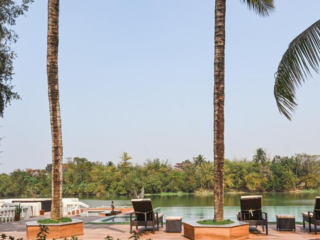
Topsi River Side
Topsi River Side is a local riverside attraction near Asansol in the Paschim Bardhaman district of West Bengal, India. Situated along the Barakar River, it serves as a peaceful spot for leisure, small gatherings, and picnics for residents of Topsi and nearby areas. The site lies on the banks of the Barakar River, a tributary of the Damodar, which flows through the industrial belt of Asansol. The area combines natural scenery with the backdrop of Asansol’s semi-urban landscape, offering greenery, open river views, and seasonal sandbanks. The river’s flow and vegetation change notably between monsoon and winter seasons.

Panchet Dam
Panchet Dam is a major earthen-cum-concrete dam on the Damodar River near Asansol, India. Completed in 1959, it forms part of the Damodar Valley Corporation (DVC) network, a multipurpose river valley project designed for flood control, irrigation, and power generation in eastern India. Built as the fourth and final dam under the DVC system, Panchet Dam combines an earthen embankment with a central concrete spillway. The design reflects mid-20th-century Indian dam engineering influenced by U.S. Tennessee Valley Authority models. The reservoir created by the dam, known as Panchet Hill Reservoir, extends across the border of Jharkhand and West Bengal, providing vital regional water storage.
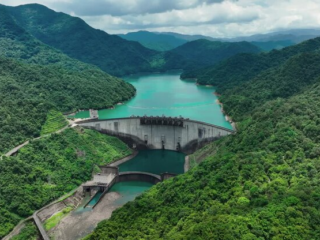
Maithon Dam
Maithon Dam is a major multipurpose dam built across the Barakar River near the town of Maithon, on the Jharkhand–West Bengal border close to Asansol. Commissioned in the 1950s, it is operated by the Damodar Valley Corporation (DVC) and forms part of India’s first multipurpose river valley project. It serves as a key site for flood control, irrigation, and hydroelectric power generation. Constructed as part of the post-independence Damodar Valley Project, Maithon Dam was designed to manage the seasonal flooding of the Damodar River system, often called the “Sorrow of Bengal.” Completed in 1957, it represented one of India’s early integrated river basin management efforts, modeled partly after the Tennessee Valley Authority in the United States.